

Digital training platform


Scaling digital training programmes worldwide
At first glance, the development of digital training programmes for the logistics sector sounds like a routine use case for us. Things get exciting when a global player like DB Schenker comes into the picture: as an international logistics service provider, the company has a large number of sites where digital training is to be rolled out step by step.
But how do you roll out a new training system in such a large company? As well as the buzzword ‘scalability’, we’re relying above all on a dynamic modular solution and an innovative streaming platform. Let’s get started!
Think Big – Start Small
In the logistics sector, efficiency is of paramount importance, because time is money – moreover, customers expect seamless delivery processes, which can be the decisive competitive advantage. Accordingly, it is essential to optimise processes and ensure staff are suitably trained – making this scenario an ideal area of application for digital training.
DB Schenker is no stranger to digital training: whilst it has already had positive experiences with a pilot project, DB Schenker has sought to break new ground in terms of rapid implementation and cost-effectiveness.
Even though parcels are dispatched in a similar way worldwide and internal company processes are comparable, the devil is in the detail here too: even if the general conditions are the same everywhere, there are customer-specific variations and particularities. Such as, for example, the order of certain processes, differing filing systems or country-specific variations in the dispatch system.
That is why we have opted for a modular system based on the VR Builder from MindPort GmbH. This enables our client to customise the training programmes in-house themselves. In this way, we combine the ease of use of a standardised process editor with the detailed reconstruction of real-world workflows that only a bespoke solution can offer.
For this feat of cross-border logistics training to succeed, a solid foundation is required, which in our case means a detailed modelling process.
To this end, we have set out all the processes in a script in close consultation with DB Schenker: as well as detailing the requirements, we have also defined the level of precision and abstraction. Keyword: expectation management. Check!
We’re packing up…
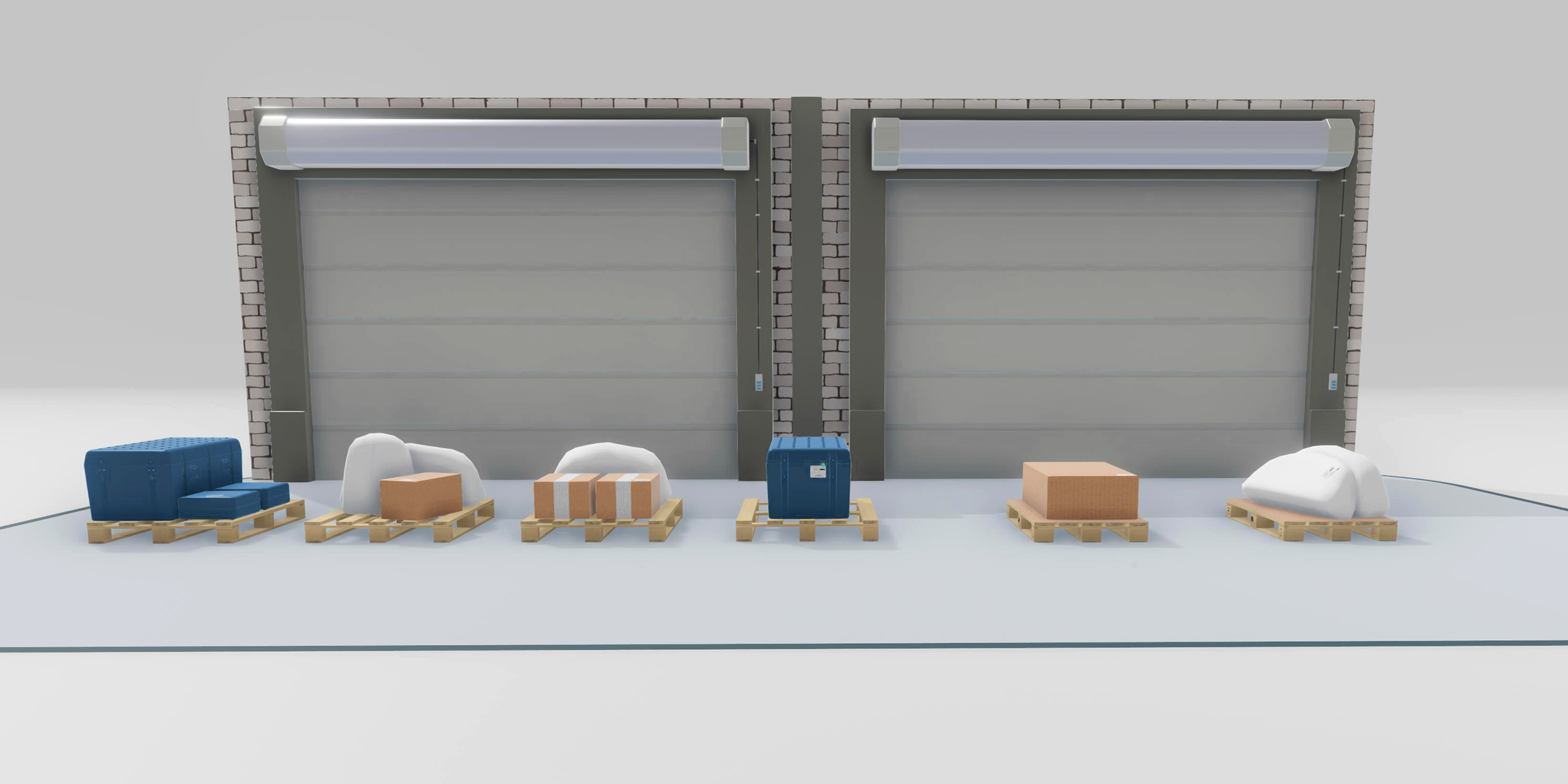
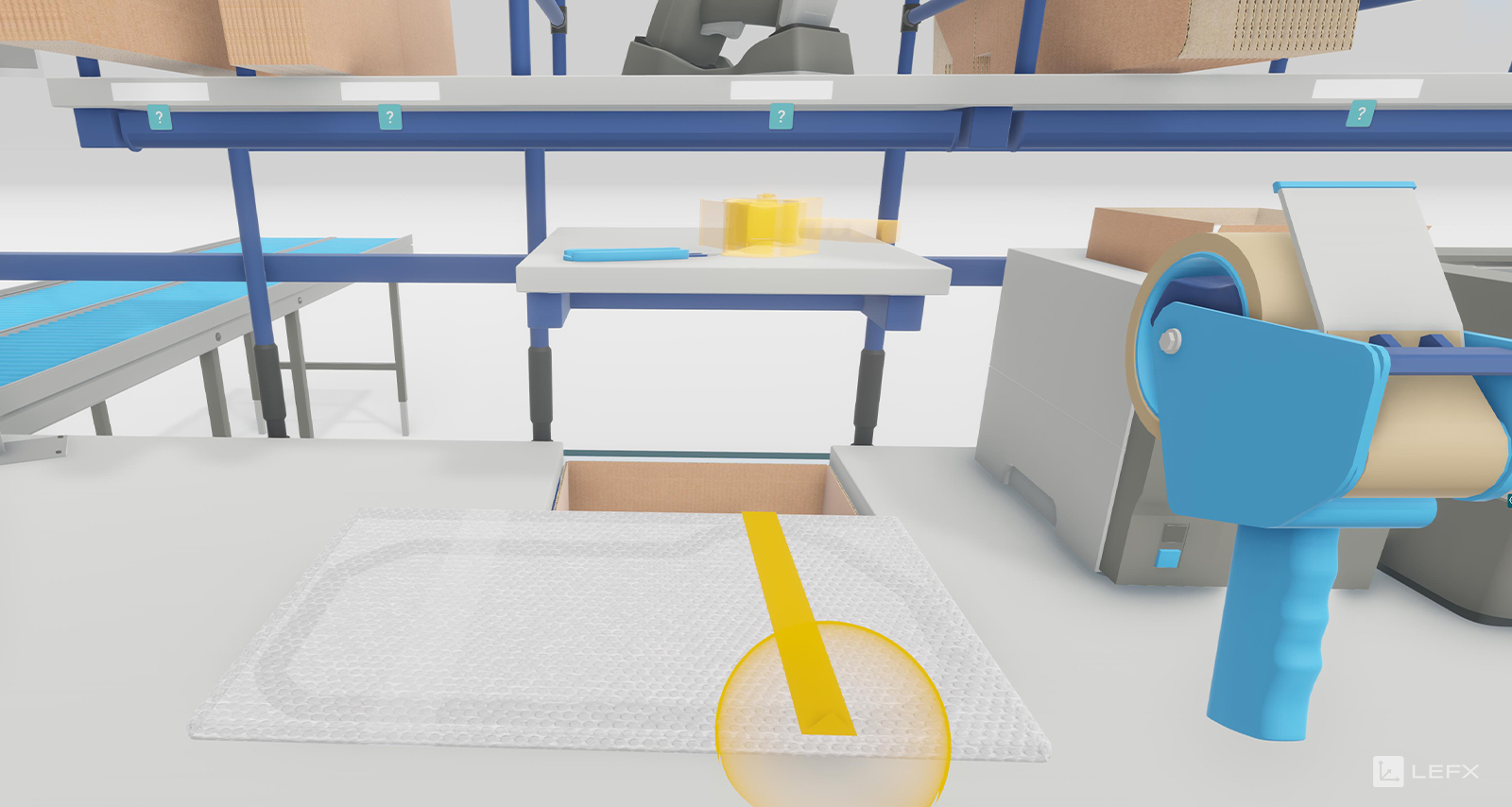
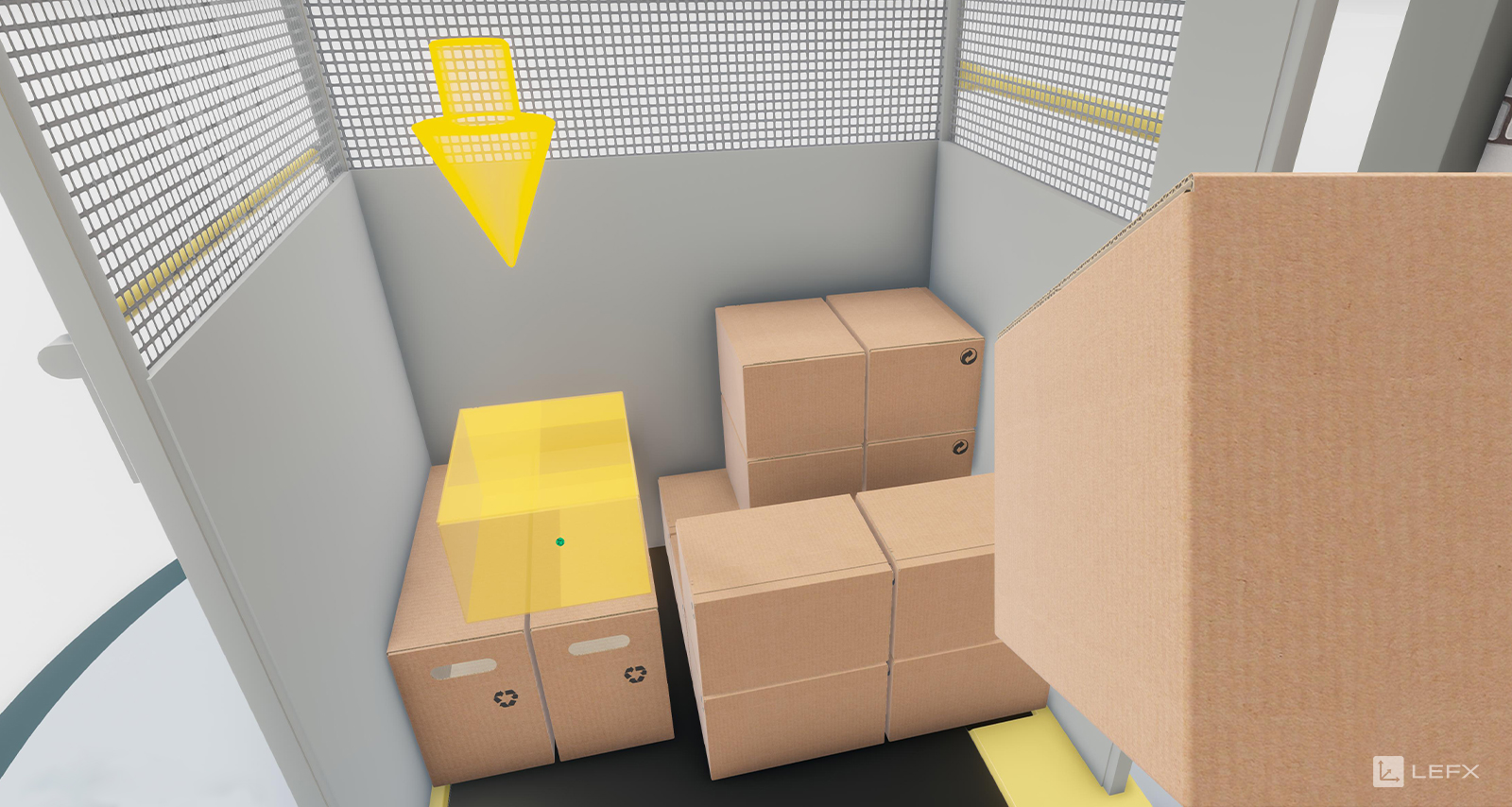
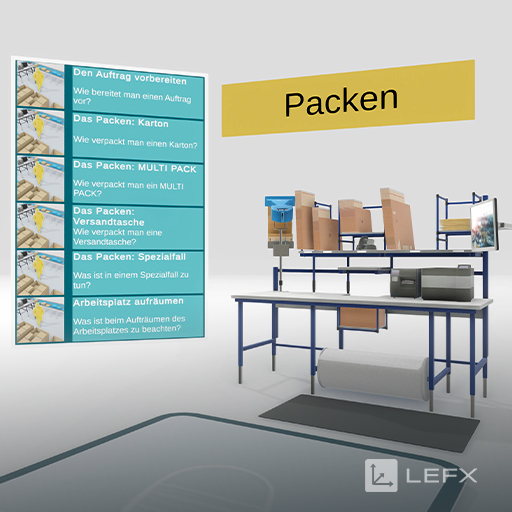
In short, that is exactly what our training programme is all about, as we are currently providing training in the areas of packaging, consolidation and dispatch.
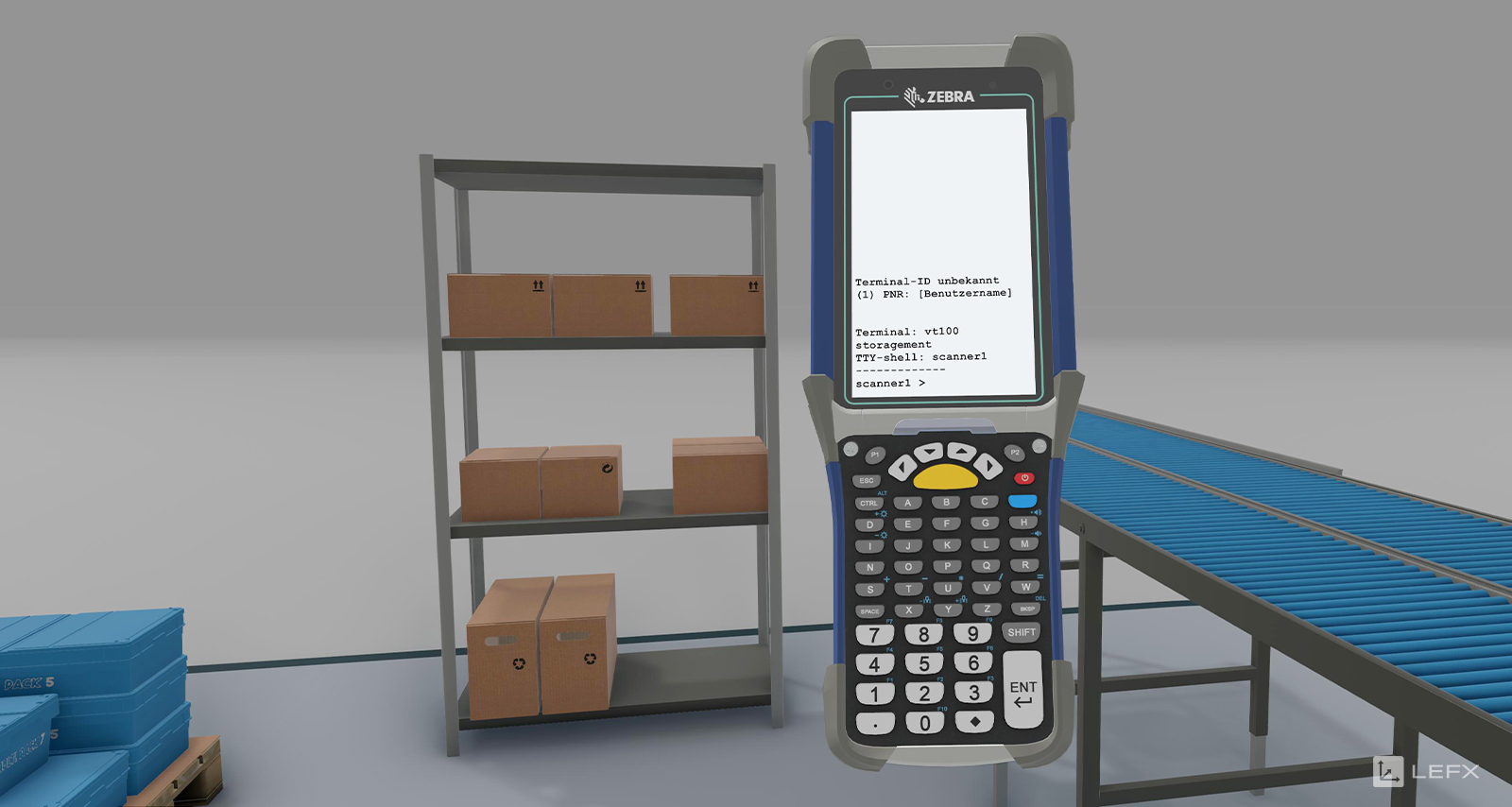
We do not limit ourselves to the physical tasks alone, but also incorporate software training, during which participants learn both the processes within the logistics software used by the company and how to use the hand-held scanners. In addition, multiple-choice questions can be used to test theoretical knowledge and ensure correct procedures are followed.
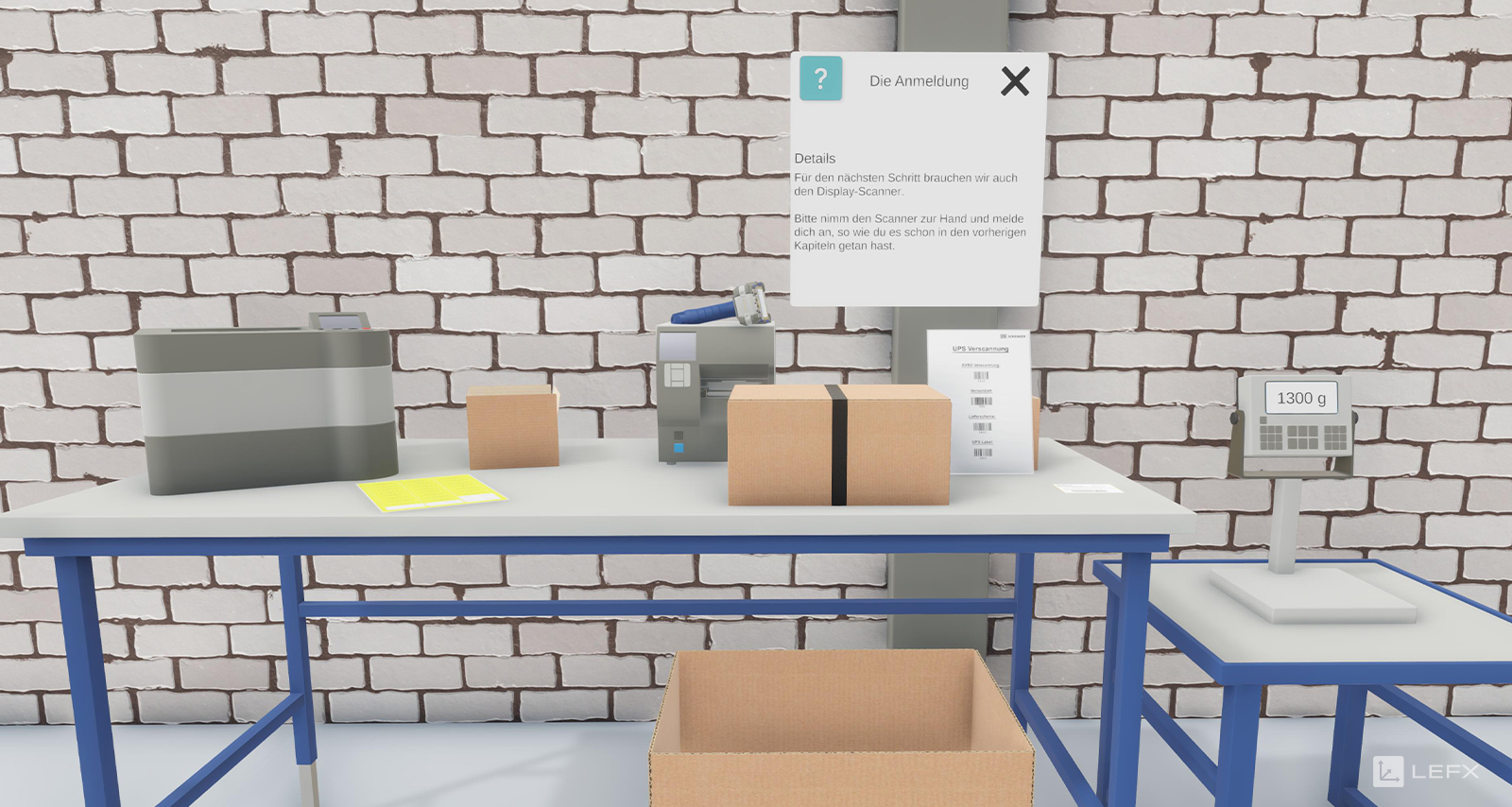
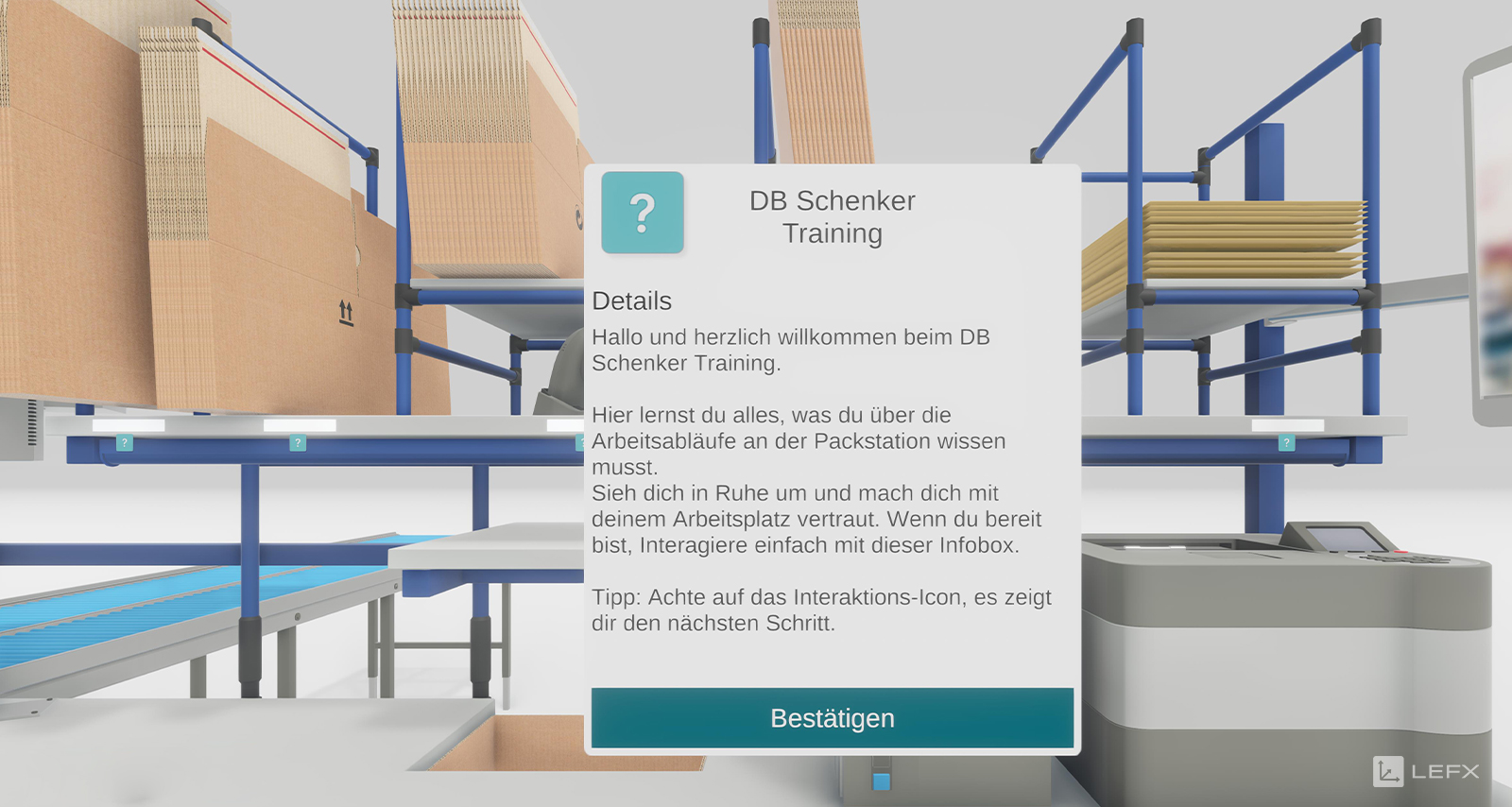
To ensure a successful immersive experience and enable trainees to concentrate fully on the content, we ensure the interface is intuitive and guide users through the application using pop-up windows and simultaneous audio prompts. There are also interactive prompts that show where to find things or what to do next.
This is how we replaced traditional on-site training, which requires a great deal of support – and did so without disrupting day-to-day operations. Just one of the benefits of virtual training.
Hardware as a limiting factor? Not with us!
When it comes to scalability, hardware is a factor that cannot be overlooked, not least from a financial perspective. We address this with a clever multi-channel solution:
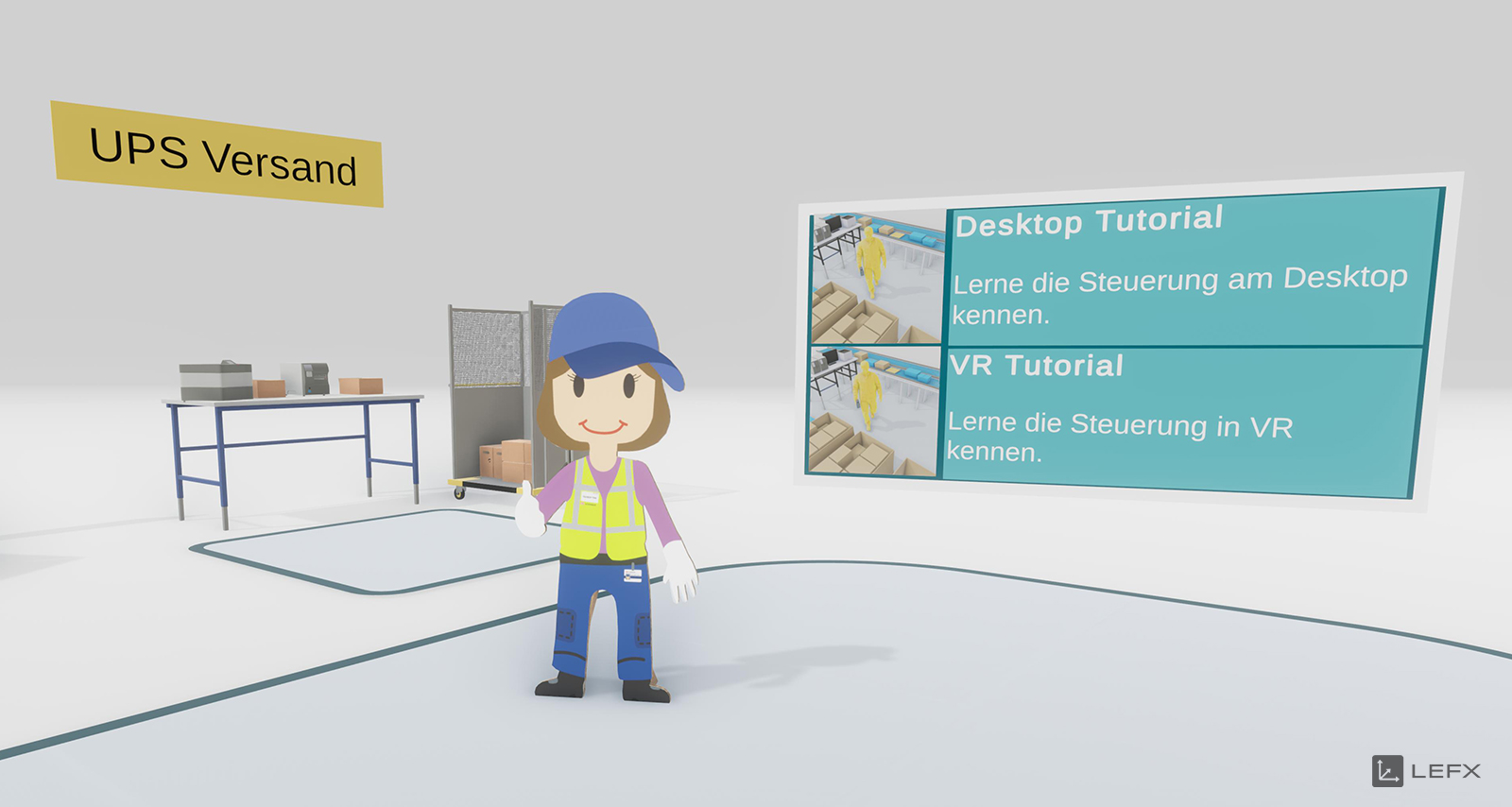
Although we developed the training programme primarily for the PC-based HTC Vive Pro headset, the application can be used with a wide variety of VR headsets – whether PC-based or stand-alone – as well as on a desktop computer; a standard office computer is sufficient for this.
How does it work? We use the platform Innoactive Portal, thereby creating, in a sense, a Netflix for training apps, from which any training session can be streamed regardless of location.
When developing the application, we take the limited performance of the devices into account and adopt a minimalist, clear design style that can accurately depict all relevant processes without placing too great a strain on processing power.
Trailer
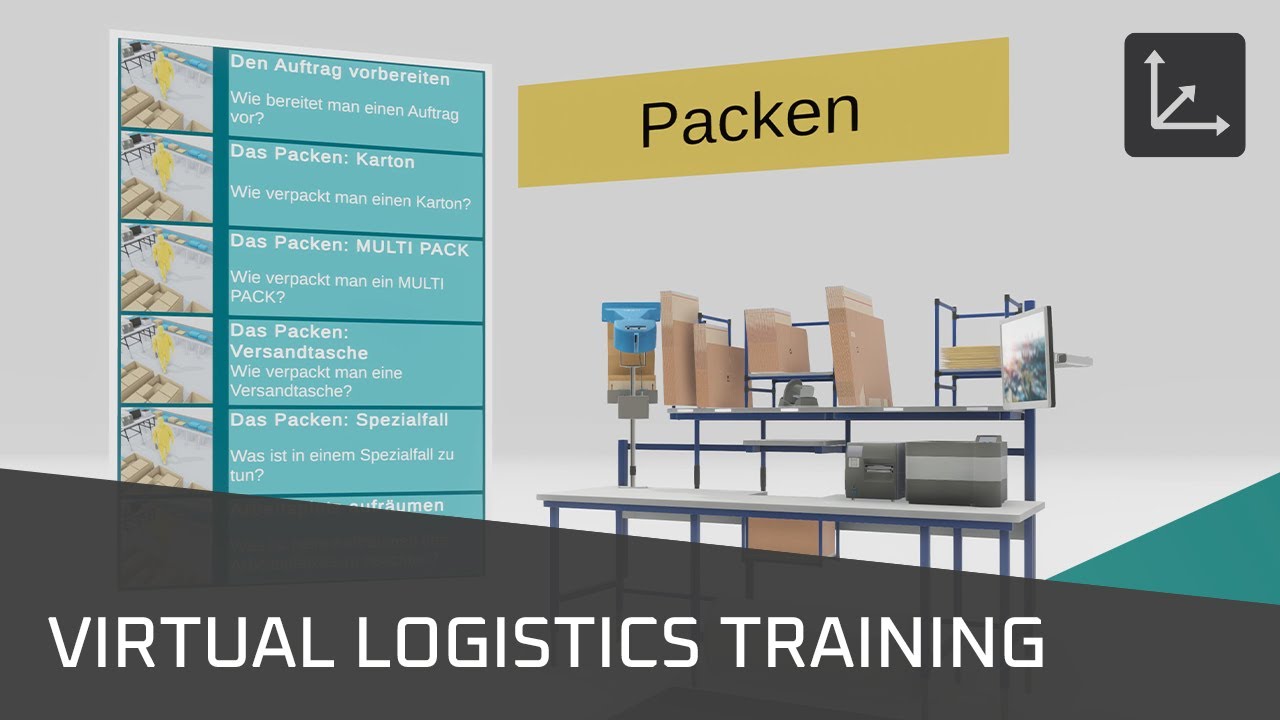
By loading the video, you agree to YouTube’s privacy policy.
Find out more
Scale it and you’ll make it
With this training programme, we have laid a solid foundation for training at DB Schenker AG and taken our training to a new level.
Our formula for scalable digital training:
- Platform: a standardised modular system that is nonetheless tailored precisely to the customer’s needs
- Customise: Training courses can be customised in-house by the client
- Hardware: The application runs on a wide range of devices
- Connect: the portal enables a global roll-out and centralised access control
- Compare: digital training programmes promote consistent standards across sites by improving comparability
- Scale: the more training sessions are included, the cheaper each one becomes
What does the customer say?
In the logistics sector, digital training programmes are an effective and innovative solution for onboarding and further training. They enable staff to experience realistic simulations of our logistics processes in a virtual environment and to improve their skills without using up real resources or equipment. Through this practical training, we boost our employees’ motivation, reduce training costs and lower the error rate. Thanks to the training platform, we have the foundation to drive this initiative forward across the group.
Christina Kunze, DB Schenker AG

Do you like what you see?