
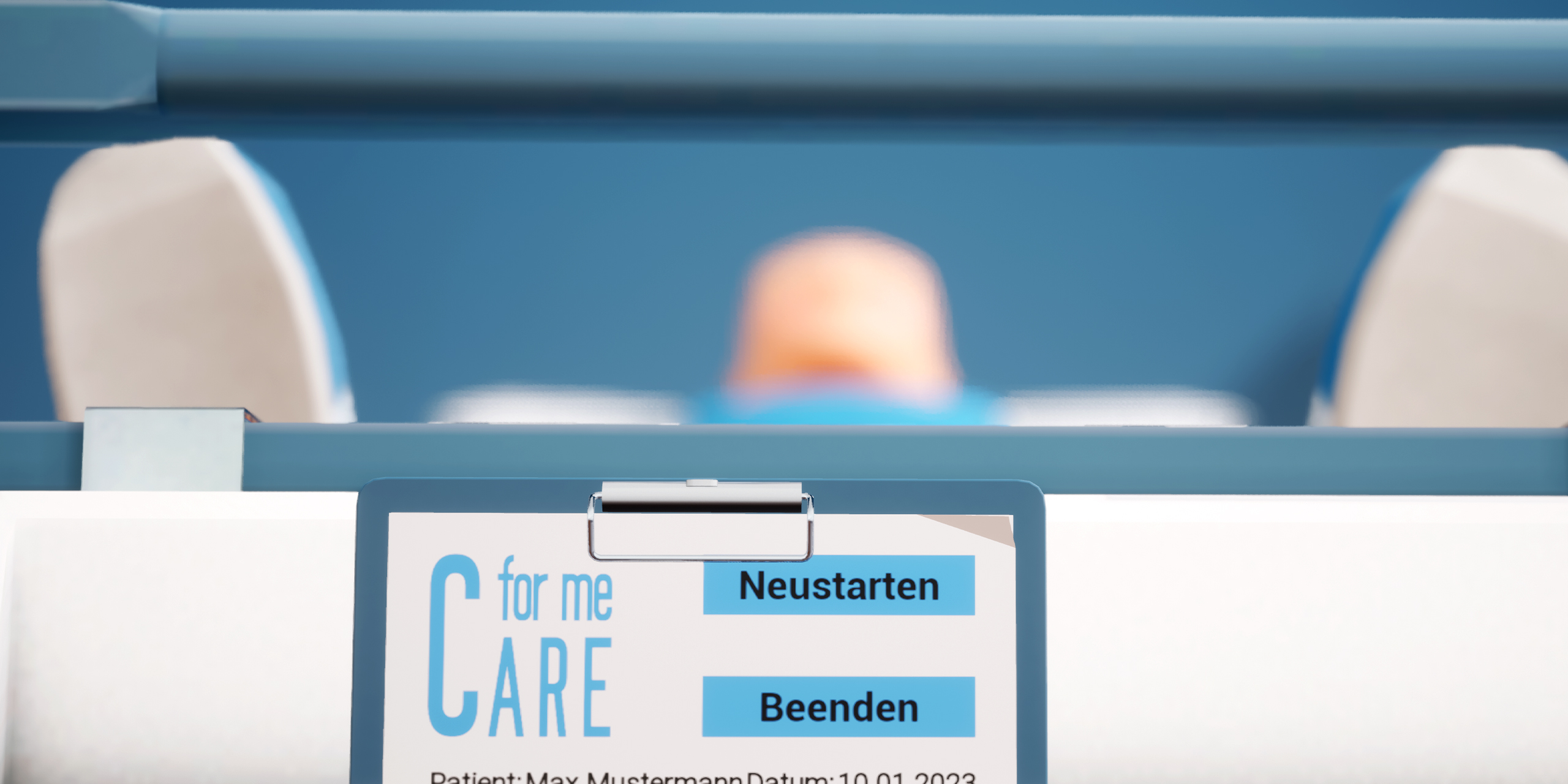

VR Patient Care
Actively tackling the shortage of skilled staff in the care sector
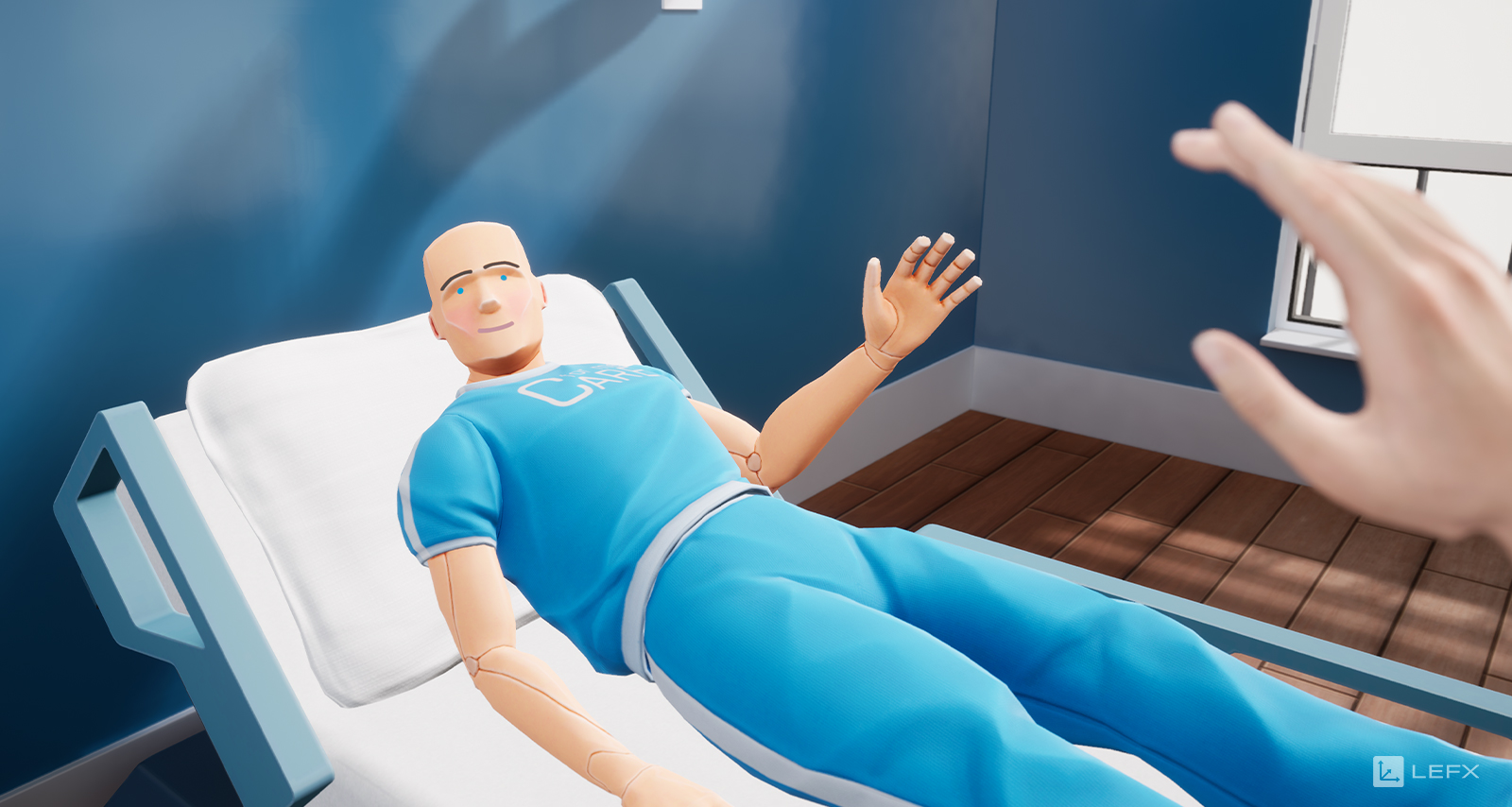
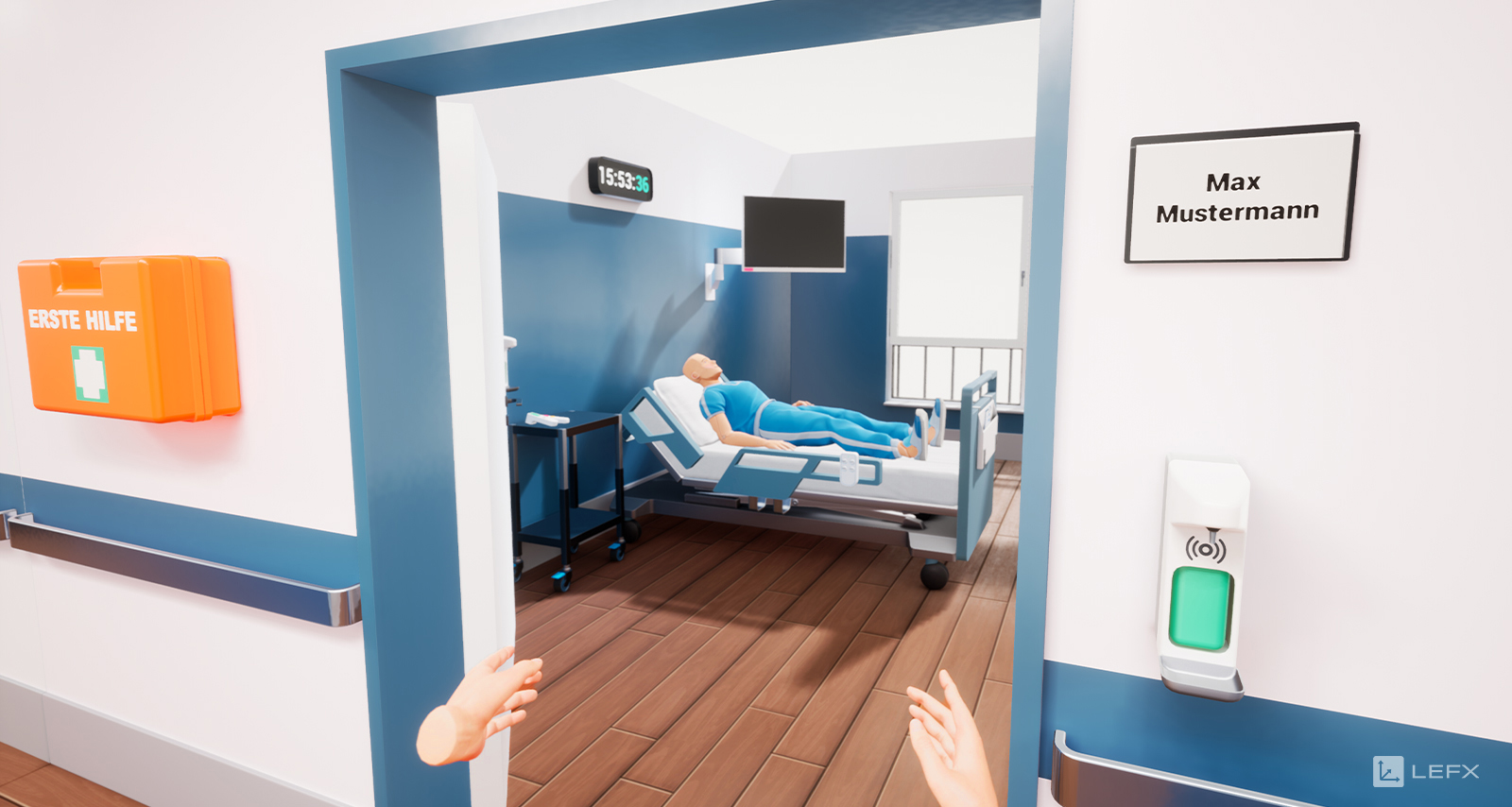
VR training is already used in the healthcare sector, but is mainly employed in the initial and continuing training of highly specialised professionals such as surgeons. So why not make this innovative form of learning accessible to other healthcare professionals as well? That is exactly what we are doing – with our VR Patient Care application, we are creating a prototype for the promising yet underrated use case of nursing training.
With our finger on the pulse
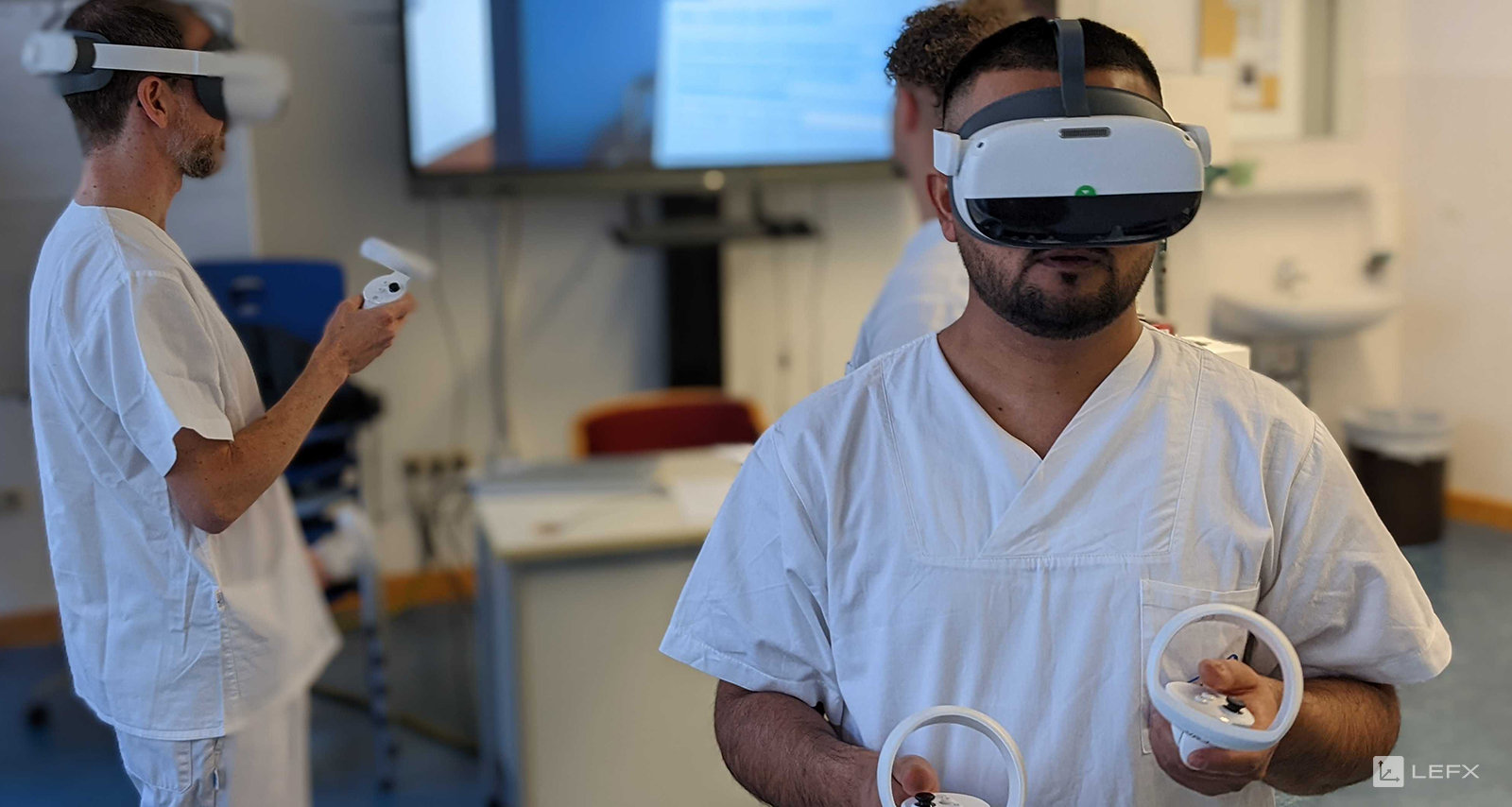
That is our guiding principle for working with our project partner, the Wannsee Nursing Colleges. Together, we aim to make lessons not only more digital, but above all more interactive, in order to offer training that is as practical as possible whilst remaining engaging. In doing so, we also boost motivation and stimulate motor memory to ensure long-term learning success. As well as consolidating theoretical knowledge, virtual training sessions help students experience everyday workflows, thereby overcoming any reservations and ensuring they are fully prepared to deal with patients.
Trailer
By loading the video, you agree to YouTube’s privacy policy.
Find out more
What is particularly close to our hearts
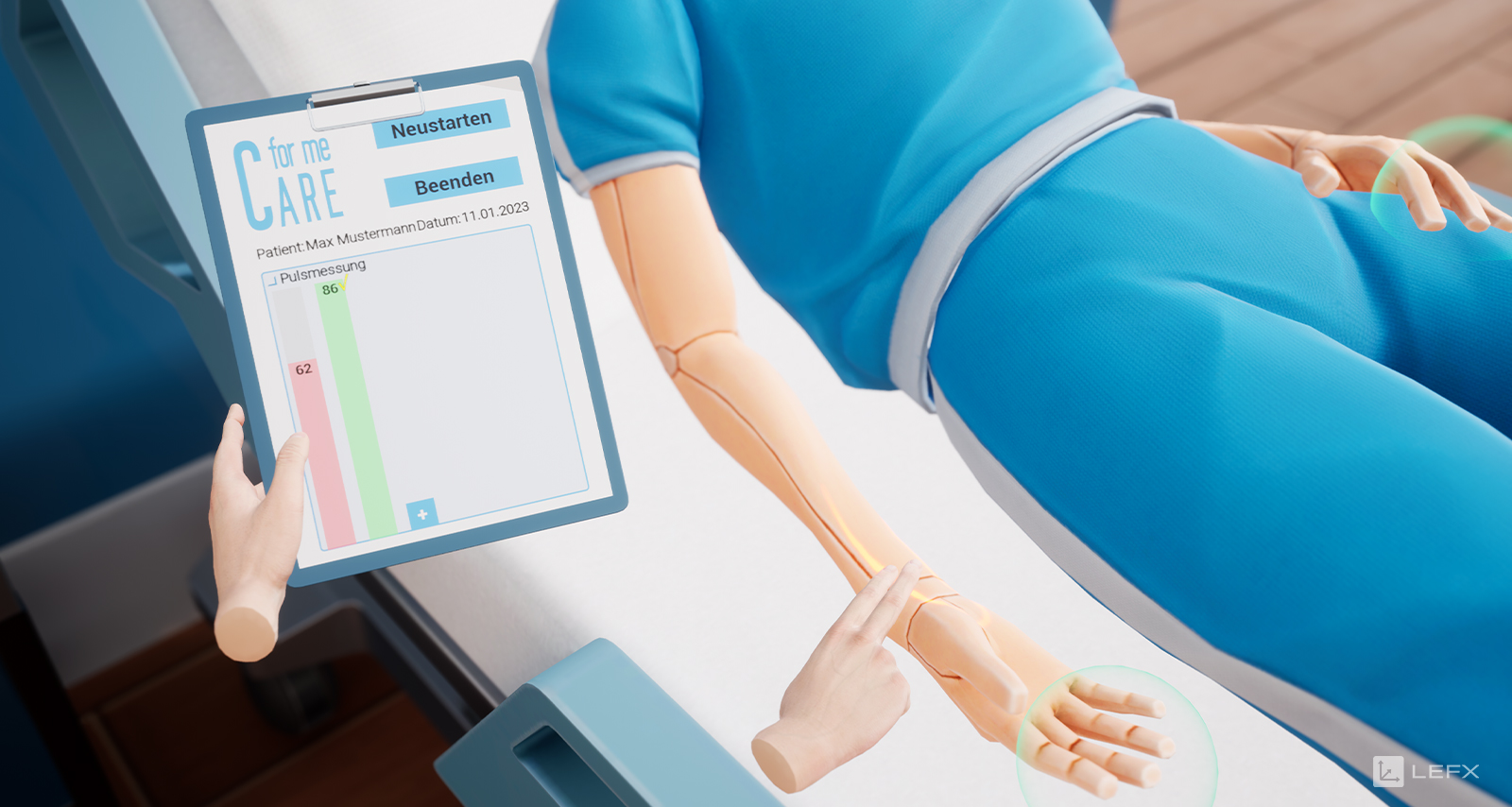
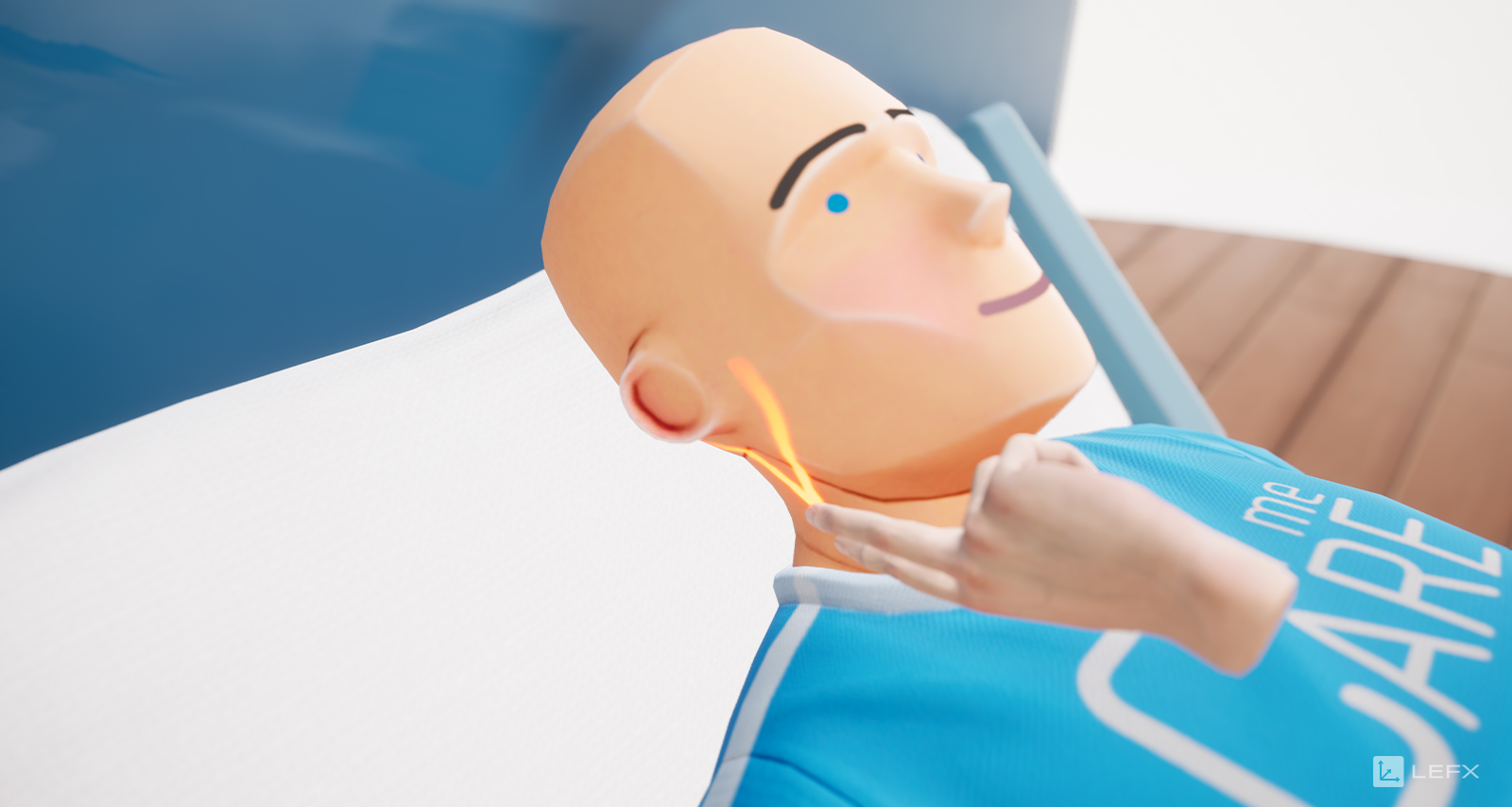
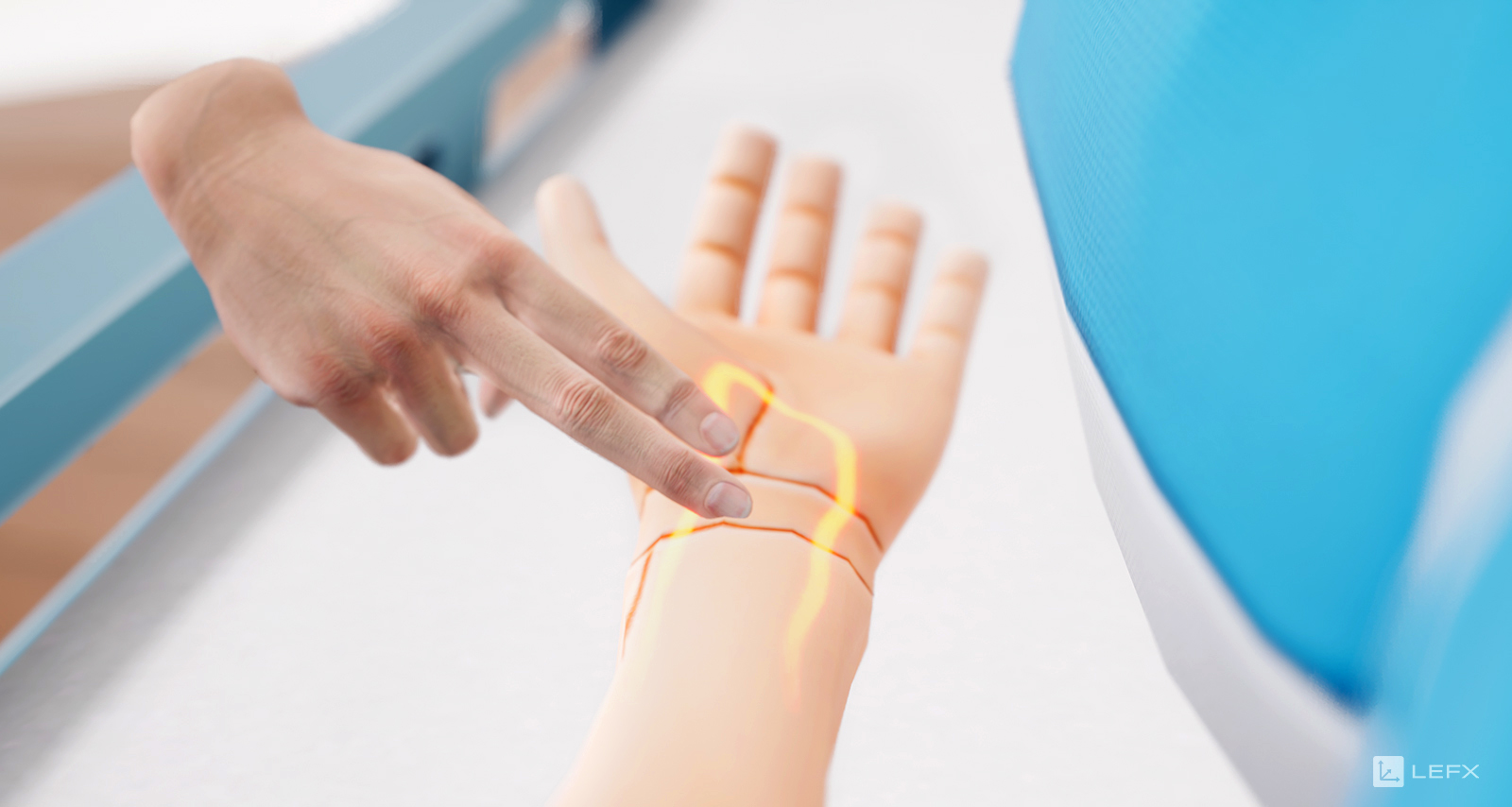
In terms of content, we’ll start with a simple, clearly defined topic: taking your pulse. The curriculum focuses primarily on practical application here, and thanks to VR training, every pupil receives immediate feedback without needing one-to-one supervision from a teacher. This allows for more extensive practice at their own pace, until every step of the procedure and mental arithmetic are perfectly mastered.
We want to teach the learners how to take a pulse, rather than causing their own heart rate to rise unnecessarily. As the pupils have very little prior experience with VR, we are ensuring the application is accessible and are focusing on intuitive and simple operation.
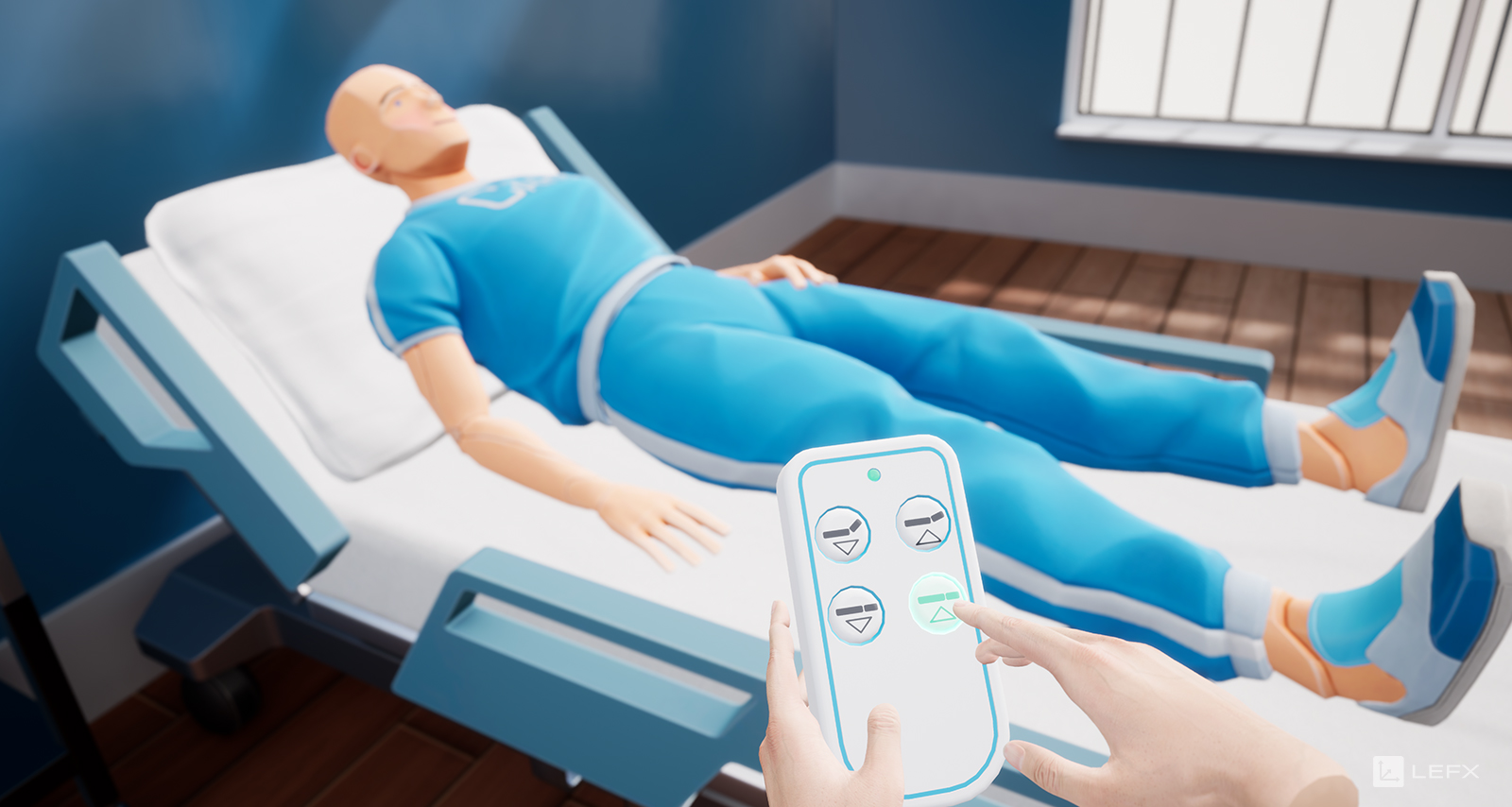
To make it easy to get started, we have put a great deal of effort into creating a detailed tutorial that offers plenty of opportunities to practise and experiment. This allows trainees to test the virtual environment and the controls thoroughly until they feel confident enough to concentrate fully on the tasks during the actual training.
Performance on Point, but No Pressure
Vital signs must be realistically reproduced in terms of both feel and timing in order to offer genuine added value. To achieve this, heartbeats are simulated using vibration feedback from the controllers; this can be precisely controlled and can therefore replicate the human pulse with remarkable realism.
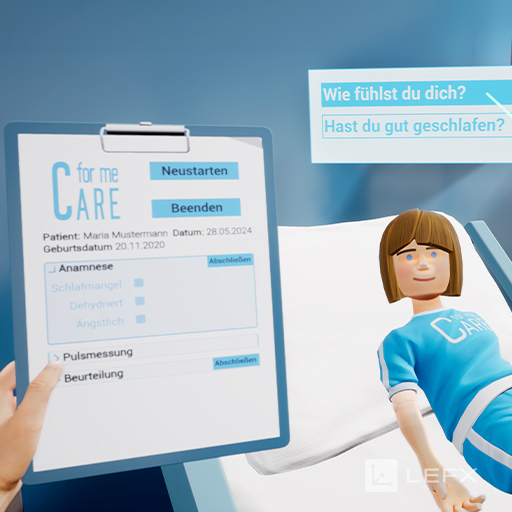
As well as measuring your heart rate, the app focuses on analysing the readings. It provides immediate feedback on whether the calculated values are correct or how far they differ from your actual heart rate.
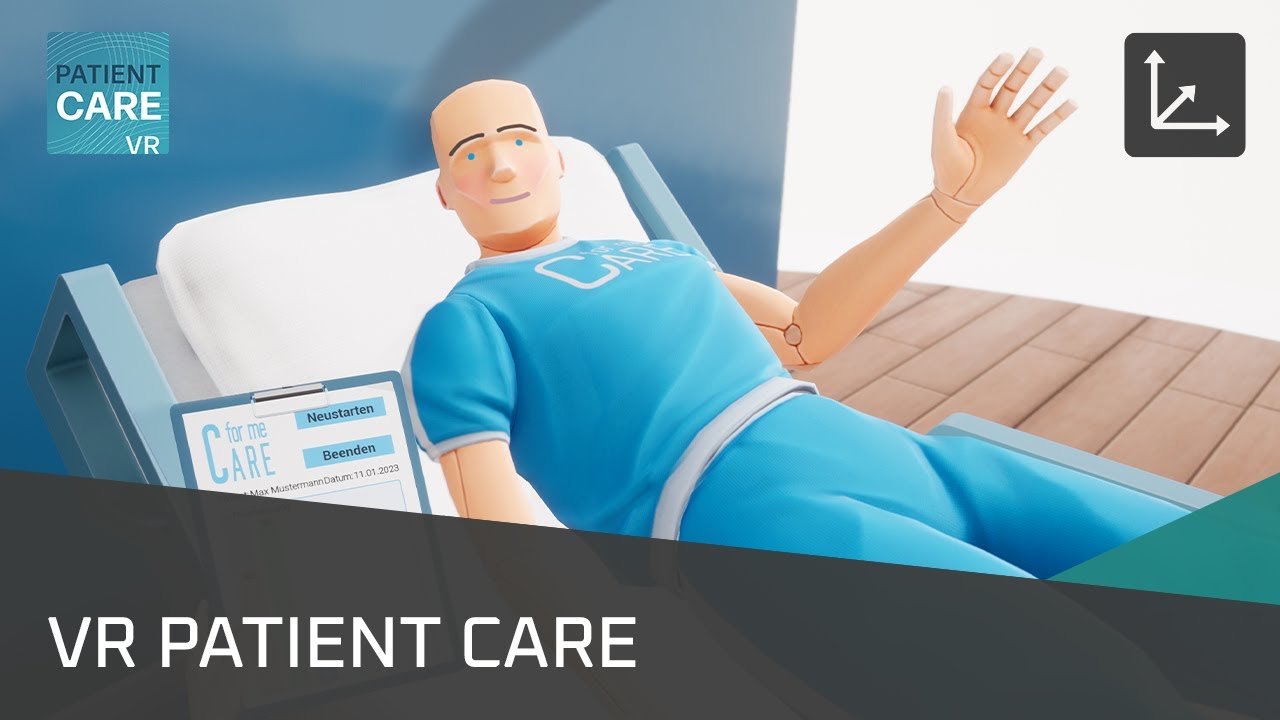
To ensure a straightforward and cost-effective experience, we are once again using stand-alone headsets for this training course and adapting the graphics to suit the limited performance capabilities. The result is a minimalist yet compelling art style that runs no risk of exceeding the capabilities of the VR headset or distracting from the learning content.
For this project, too, we are drawing on the expertise of our hardware partner, Schenker Technologies, who, in addition to advising on the most suitable device, is putting together a comprehensive package comprising a class set of VR headsets, complete with a storage solution.
Trailer
By loading the video, you agree to YouTube’s privacy policy.
Find out more
The app doesn’t just make our customers’ hearts beat faster
In addition to the training centre, we are receiving very positive feedback and suggestions for the planned expansion, particularly from the students:
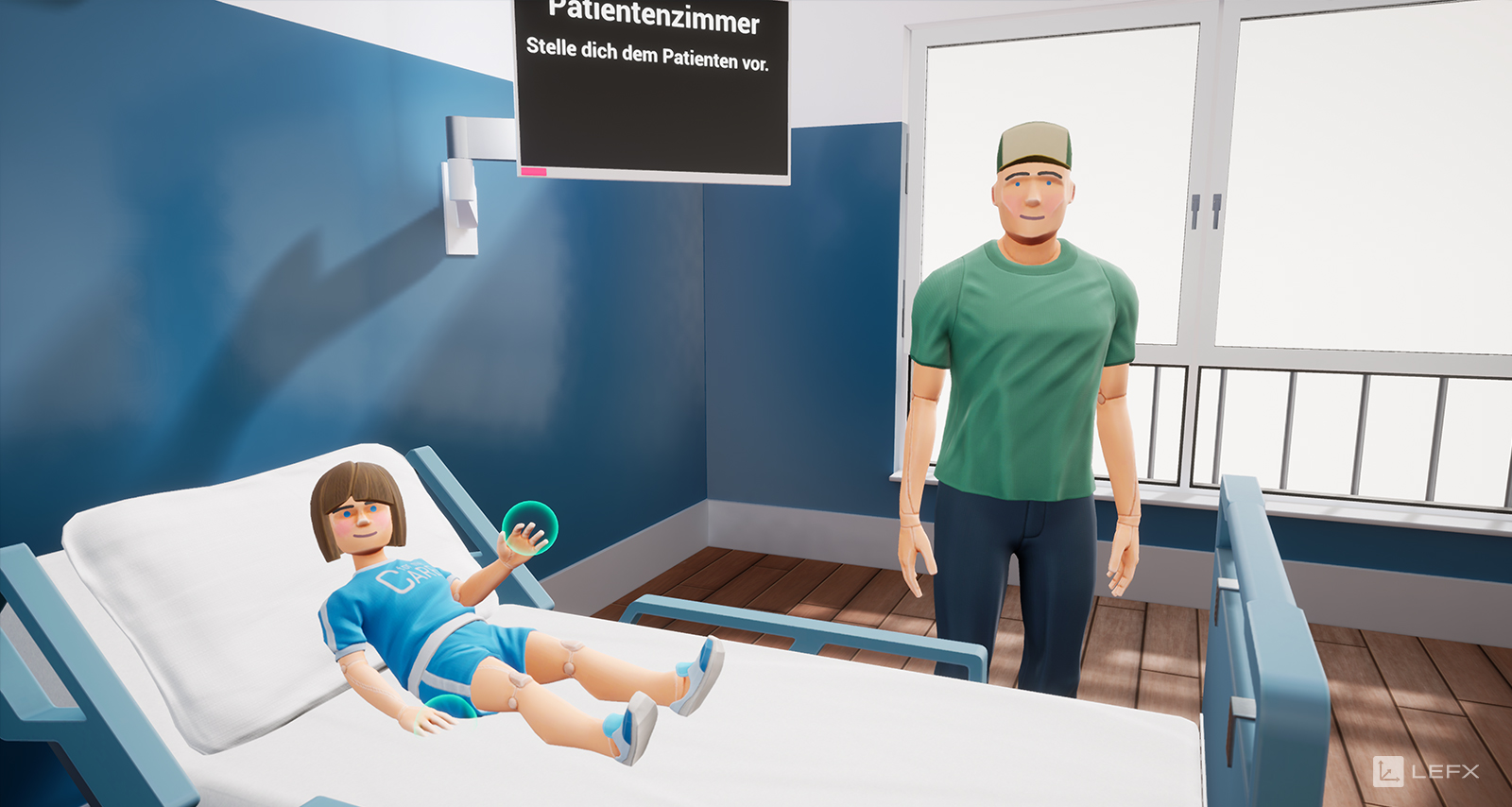
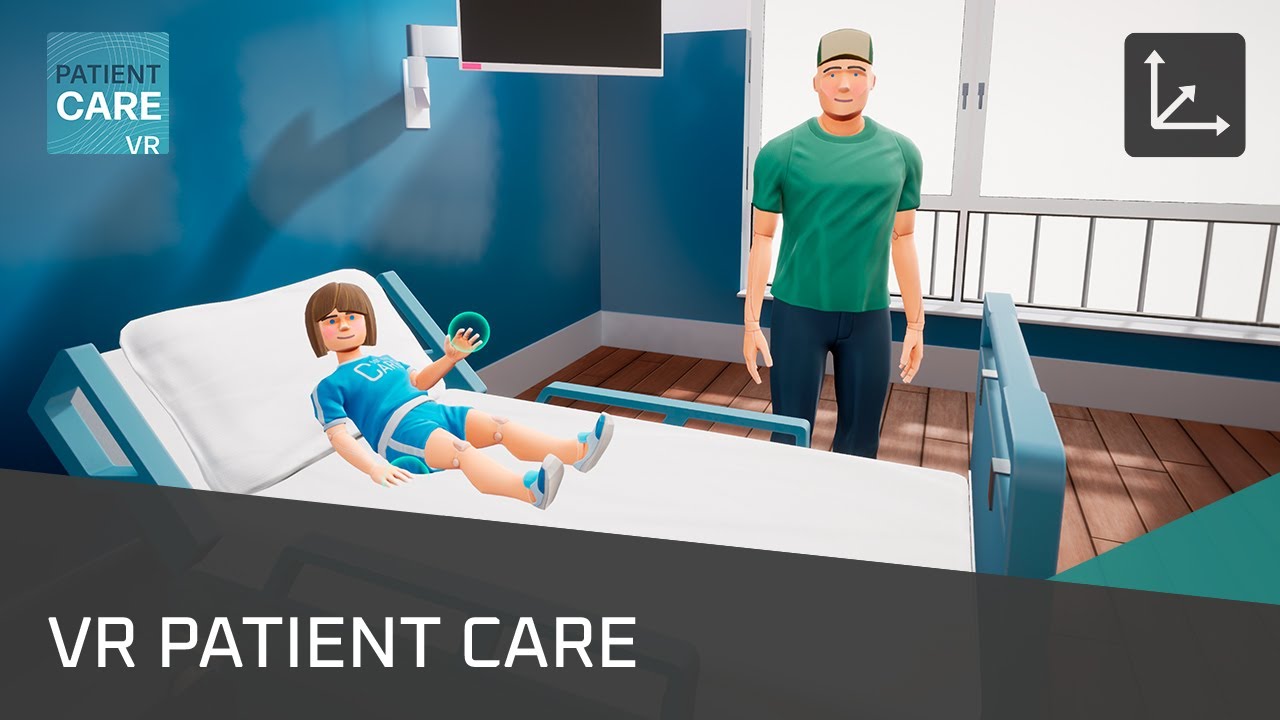
We are starting with greater patient diversity to include children with a faster heart rate and people with cardiac arrhythmias. Furthermore, the patient becomes more active, and there is a need for greater interaction with them and other disruptive factors in the room. To ensure that the theoretical aspects are not neglected, multiple-choice questions are regularly incorporated to test specialist knowledge or situation-specific actions. In short: we create an everyday scenario that is as realistic as possible, in which trainees are thoroughly prepared for their challenging day-to-day work.
Our aim is also to expand the portfolio in the long term by adding further learning content and more complex scenarios, thereby making a large part of the training practical and digital.

Do you like what you see?