
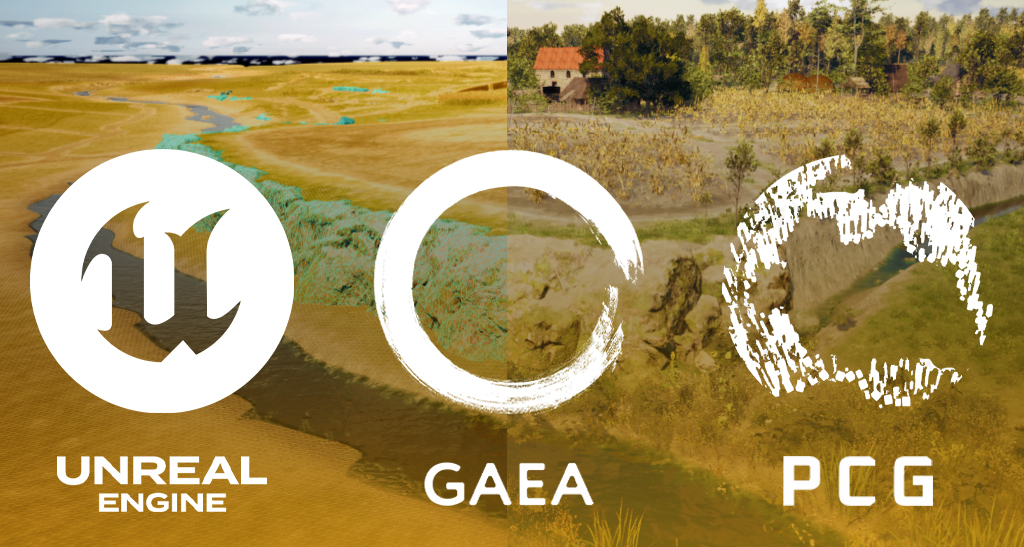
Vast digital worlds don’t just appear out of thin air. Behind the mountains, valleys, forests and seemingly randomly scattered details lie vast amounts of data, rules and, ideally, a workflow that takes as much of the work off your hands as possible.
That’s why we combine various tools and techniques for our real-time 3D worlds in Unreal Engine. We’ll show you, step by step, how this results in a vast landscape!
First, the terrain …
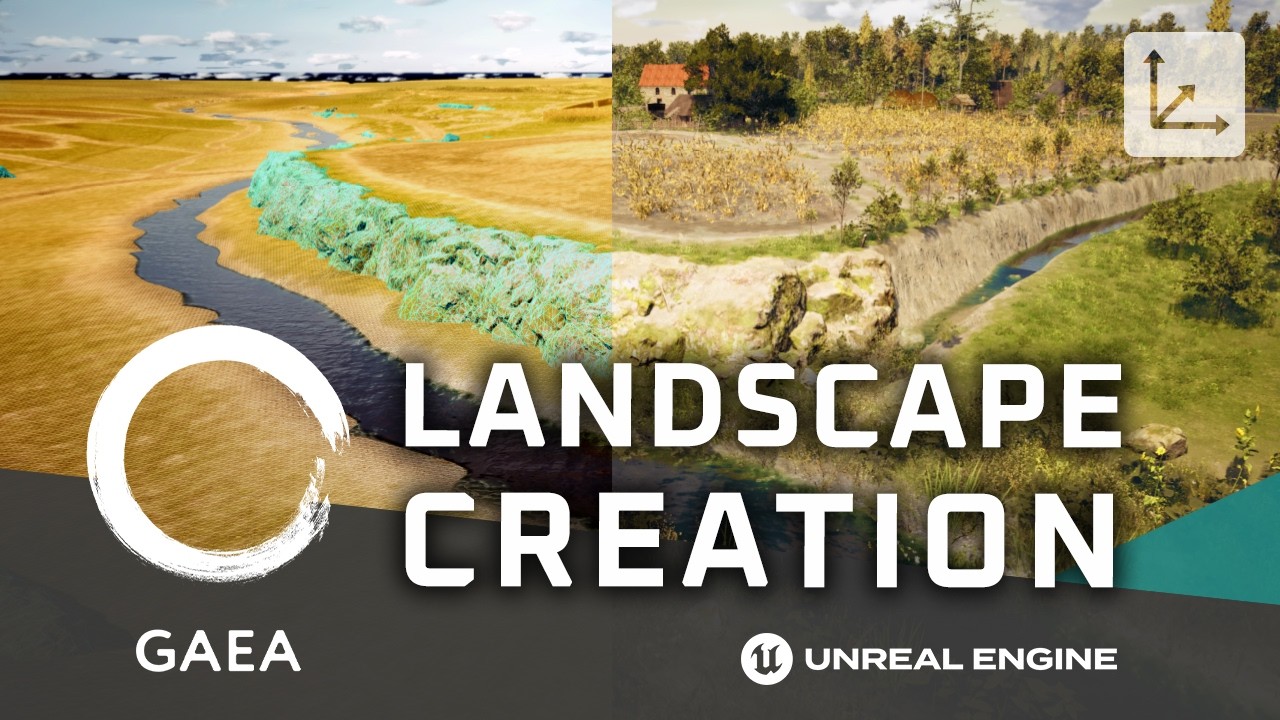
It all starts with the terrain. Using Gaea, Photoshop and Unreal Engine, we use terrain data to create a landscape which can then be further edited within the engine.
It’s not just about creating a few attractive mountains. Heightmaps, different data layers and the correct preparation of the terrain lay the technical foundations for everything that is to take place there later on.
By loading the video, you agree to YouTube’s privacy policy.
Find out more
… and then the world comes to life
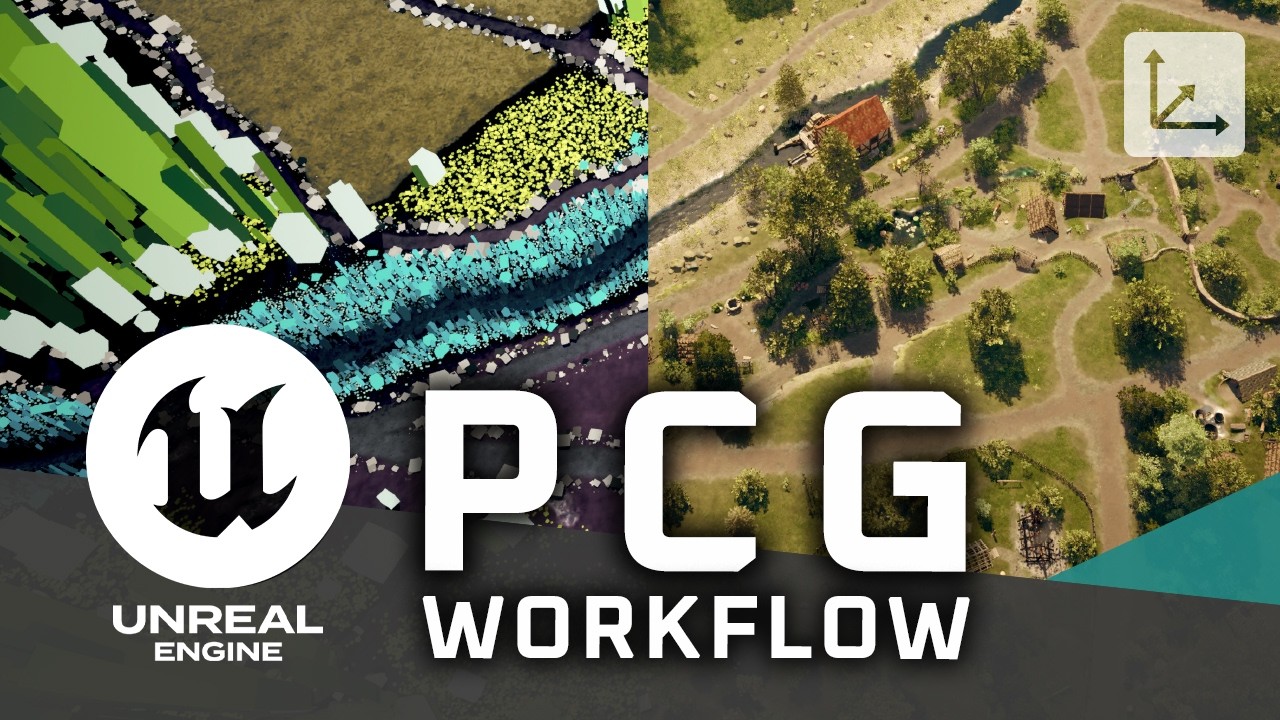
Once the landscape is complete, there are still forests, plants, rocks and all those little details needed to make a virtual environment look realistic. However, placing thousands of objects one by one would be neither particularly clever nor efficient.
This is where Procedural Content Generation – PCG for short – comes into play. Instead of setting every detail by hand, we define rules that allow the Unreal Engine to build large parts of the world autonomously. This not only saves time, but also opens up entirely new possibilities for creating and optimising large-scale scenes, whilst ensuring scalability and cost-efficiency.
By loading the video, you agree to YouTube’s privacy policy.
Find out more
Work efficiently, leave more time for the finer details
Procedural generation and attention to detail need not be a contradiction. Quite the opposite, in fact! When repetitive tasks are automated, there is more time for what really makes a virtual world special: key scenes, atmosphere and individual details.
The smart use of Gaea, PCG and similar tools makes large-scale open-world projects manageable even for smaller teams, ultimately saving not only time and stress but also improving performance, whilst ensuring a cost-effective and easily scalable implementation.
Have you had any experience with similar workflows, or are you currently planning a similar real-time project? If so, please get in touch with us!